Archives
- November 2025 (4)
- October 2025 (4)
- September 2025 (4)
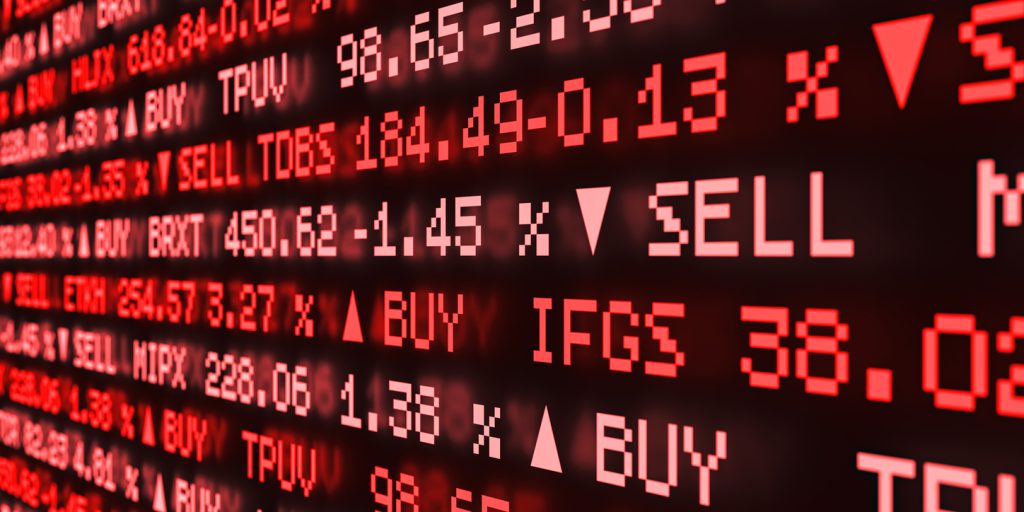
So, you’ve noticed current market volatility. Having concerns about your investments is normal, but downturns are not unusual – and not a reason to panic.
Expansions and contractions, peaks and troughs; they’re all part of the economic cycle. Downturns have been happening for as long as there has been an economy. As history has shown us, they don’t last forever, and every downturn is followed by recovery.
Understanding the way the market moves is important so that you know what to expect, how to prepare and how to respond. With a solid financial plan, strategic investments – and calm – it’s possible to navigate any market downturn.
We’ve all seen the headlines when markets fall. It’s common to feel disappointment, even shock, and that’s why it’s helpful to understand exactly what’s going on.
A financial downturn is a period when prices fall across assets. It’s usually accompanied by increased market volatility, those unexpected swings that make the market harder to predict. A downturn is an economic slowdown.
There are various factors that impact downturns. Economic bubbles, with periods of inflated prices, will ultimately result in a price correction. Major world events – wars, natural disasters, the pandemic – can trigger market meltdown. Interest rate increases, accelerating inflation and government policies also play a role.
During these uncertain times, economic growth slows as people spend less and company profits decrease, lowering asset prices. We may see businesses cut jobs, which slows markets further. This can result in lower-than-anticipated returns and increased volatility.
There are specific terms to describe market phases. When a market is surging ahead, it’s a bull market (like the stampeding animal). When you have declines of less than 10%, it’s called a market dip. A loss of between 10% and 20% is a correction. Drops of 20% or more are called a bear market (picture the market hibernating). If that decline happens very quickly, it’s a crash. When economic growth declines for at least two consecutive quarters, you have a recession.
A downturn, then, is just one stage of market movement, and every market stage is just that: a stage. So, after every market downturn comes recovery.
With a cyclical economy, downturns, like peaks, are guaranteed. To see this, we just need to look at history.
Unsurprisingly, we know the biggest market crashes best: the Wall Street crash of 1929, Black Monday in 1987, the dot-com bubble crash of 2000 and the Global Financial Crisis, to name a few. As mentioned, crashes are just one type of market activity. According to the S&P 500, there have been 13 crashes since the mid-20th century and 24 corrections. Investopedia lists 22 bear markets since 1929. Market dips are even more common.
In his 35 years as a financial planner, Dejan Pekic has seen plenty of ups and downs.
“When I started in 1991, we were in a recession. This was quickly followed by the bond crash of ’94. Then you had the Asian financial crisis of ’97, the tech wreck of 2000, closely follow by September 11. Just two years later was the second Iraq war. Jump to 2008 and everything was booming. Since then, we’ve had COVID, Ukraine and Trump, all influencing global markets.”
We can’t predict when downturns will arrive, or end. We do know that the best way to face a downturn is with patience, not panic.
Acting on fear during a market plunge is common. Dejan sees many clients instinctively rush to sell as soon as a downturn happens. That’s risky in a few ways.
The way investors react to market uncertainty can determine what happens next. It’s common for investors to panic, leading to mass sell-offs, which worsen a downturn. With plunging prices, acquiring a fair selling price can be hard.
Emotional reactions can also derail long-term goals. The best decisions come with perspective, patience and discipline. Diversified investments are key to compounding returns. Stay the course and you will see asset recovery.
Another consequence of emotional selling? Lost opportunity. The Newealth team are often busiest during major market dislocations – because this can be a great buying opportunity. Purchase when assets have plunged and you may be able to add to your portfolio at a bargain.
Downturns are a natural part of the economy, not something to be feared. Understanding that is the first step. Once you know that downturns and recovery go hand in hand, there’s more incentive to stay calm and stay the course.
Preparation is also key. We work with every client to create a tailored financial plan that best suits their personal goals. And we use value investing principles to focus on long-term financial security with a disciplined margin of safety.
Thinking into the future is another strategy to help you stay in control during a financial downturn. If you picture your long-term goals, there’s motivation to take a breath, refocus and move forward with confidence.
At Newealth, we’ve guided clients through every market cycle since 1991 – with clarity, transparency and discipline. Our approach isn’t about predicting the next move. Instead, we prepare for every outcome.
We use decades of experience and proven research strategies to steer you through market downturns and out the other side.
If you’re looking for perspective and a plan that stays steady through market noise, we’re here to help you stay the course with confidence.
General Advice Warning:
The information in this blog is general in nature and does not take into account your personal objectives, financial situation or needs. You should consider whether the information is appropriate for you and seek professional advice before making any financial decisions.
Newealth Pty Ltd ABN 61 091 100 275 | AFSL 231297
At Newealth we are always looking to support and promote our clients wherever possible and if you have any ideas or comments, please feel free to email me or to call me on +61 2 9267 2322.